Wynn Resumes Construction on $5.1bn UAE Resort Following Regional Security Pause
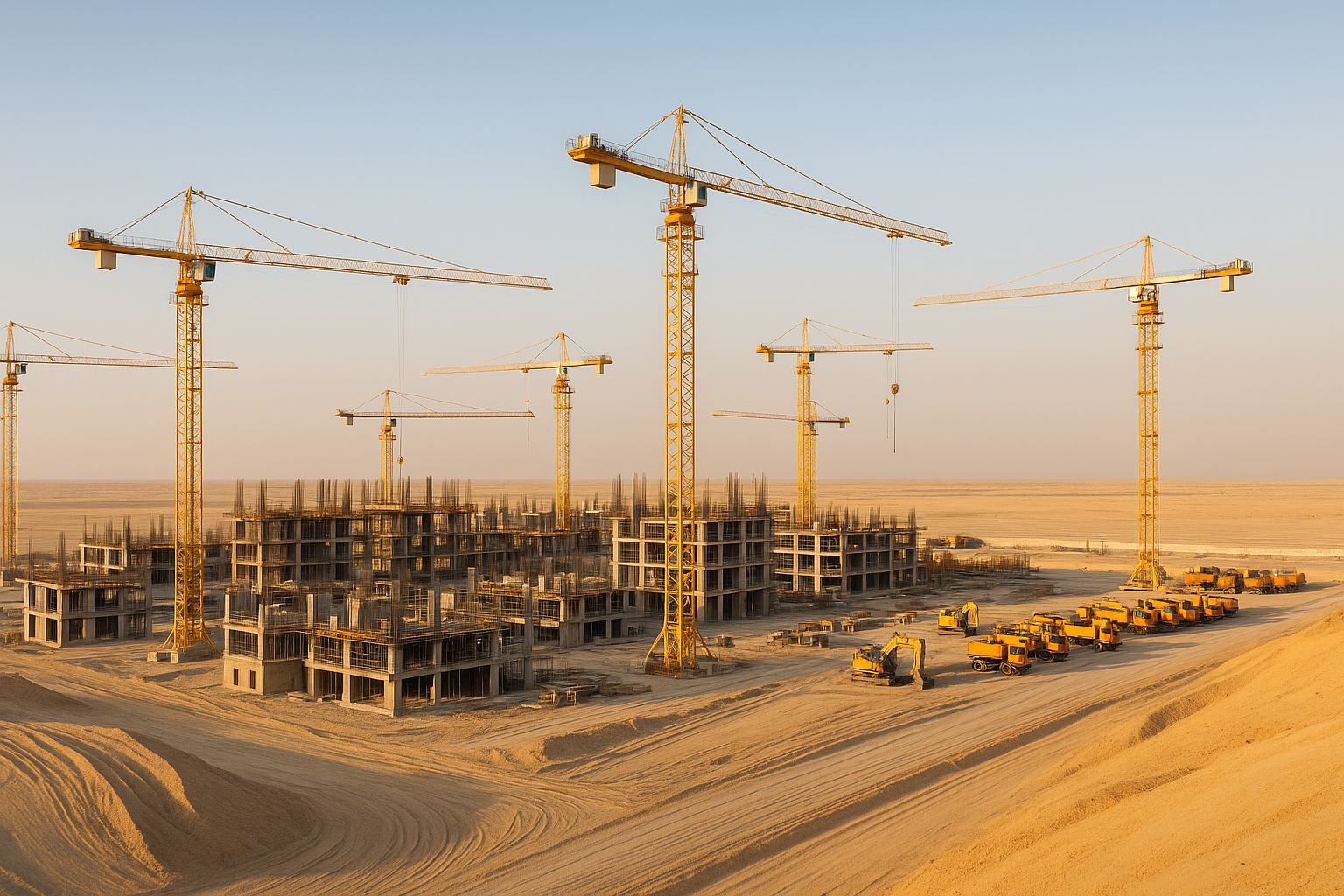
Construction has kicked back into gear at Wynn Resorts’ ambitious $5.1 billion integrated resort on Al Marjan Island in Ras Al Khaimah. The brief pause, triggered by escalating military tensions across the region, is over. For now, at least. The project, one of the most significant hospitality investments the Middle East has seen, was suspended on 28 February after hostilities involving Iran prompted travel warnings from multiple Western governments.
The temporary halt came as the United States, Australia, Germany, Finland, India and Poland issued advisories urging nationals to leave the region. Washington subsequently instructed Americans to “depart immediately” once the conflict intensified. Wynn responded by offering employees the option to work remotely from abroad if their home embassies recommended departure, a pragmatic move under the circumstances.
By Wednesday, the operator confirmed that work had resumed following what it characterised as “a short pause.” Enhanced safety protocols are now in place for on-site personnel. The company noted that for much of the local population, commercial activity has returned to normal patterns. It’s a signal Wynn views the disruption as contained rather than systemic.
Project Progress Remains on Track
Prior to the suspension, Wynn’s January construction update revealed impressive progress on the landmark development. The resort tower had reached 299 metres, with structural concrete work completed through the 71st floor. All 1,530 guest accommodations are now finished. That includes rooms, suites, townhouses and the upscale Marina Estates.
Work continues on the 648-metre Wynn Bridge, designed to provide direct highway access linking Dubai and the Northern Emirates. The company expects the bridge to be operational by year’s end, barring further interruptions. Additionally, Oasis, a purpose-built residential community for more than 7,000 workers, is scheduled to open this summer. Wynn has described it as one of the hospitality industry’s most comprehensive staff accommodation facilities globally. It’s a bold claim, but the scale backs it up.
Managing Risk in a Volatile Environment
Analysts suggest Wynn is treating the situation as a manageable operational challenge rather than an existential threat to the project. With over $914 million already invested, the scale of committed capital creates its own momentum. Sunk costs of this magnitude typically anchor corporate decision-making, even when operating conditions become uncertain. That’s business reality, however uncomfortable it might be to admit.
That said, the conflict has introduced tangible logistical headaches. Dubai International Airport, roughly an hour from the Al Marjan site, has experienced operational disruptions. More significantly, shipping bottlenecks in the Strait of Hormuz have complicated supply chains. Freight carriers are now imposing risk surcharges ranging from $2,000 to $4,000 per container. Those costs inevitably feed through to project budgets and timelines, whether Wynn likes it or not.
Kim Noland, director of high-yield research at New York-based Gimee Credit, cautioned that prolonged regional instability could suppress consumer appetite for international travel, potentially impacting Wynn and other global hospitality operators with exposure to the Gulf. MGM Resorts International, currently developing a $1.2 billion non-gaming resort on Dubai’s Jumeirah Beach, faces similar considerations as it awaits approval for the region’s second gaming licence.
Confidence in UAE Stability
Wynn has doubled down on its confidence in the UAE’s security posture and its appeal as a business and leisure destination. The company emphasised its ongoing dialogue with authorities in both Washington and Ras Al Khaimah, describing the UAE’s defence infrastructure as highly effective.
“The company believes the broad defence posture of the UAE has worked extremely well,” Wynn stated. “And we have confidence in the UAE’s ability to keep its population safe.”
For an operator with this level of capital at stake, maintaining that public confidence is essential. Not just for investor relations but for the broader narrative around the Gulf’s viability as a premium tourism market. The resumption of construction, despite lingering geopolitical uncertainty, signals Wynn’s conviction that the fundamentals remain sound. Whether that optimism proves justified will depend on factors well beyond the company’s control. But for now, the cranes are back in motion and the project rolls forward.




What the team thinks
Baz Hartley says:
Encouraging to see Wynn pushing forward with this massive investment, though I’d be watching closely how they handle any bonus offerings and promotional terms when they eventually launch. UAE properties often come with impressive perks on paper, but savvy players know the devil is in the details of playthrough requirements and game restrictions. Given the scale of this project, transparency around their rewards program structure from day one will be crucial for building trust with international visitors.